

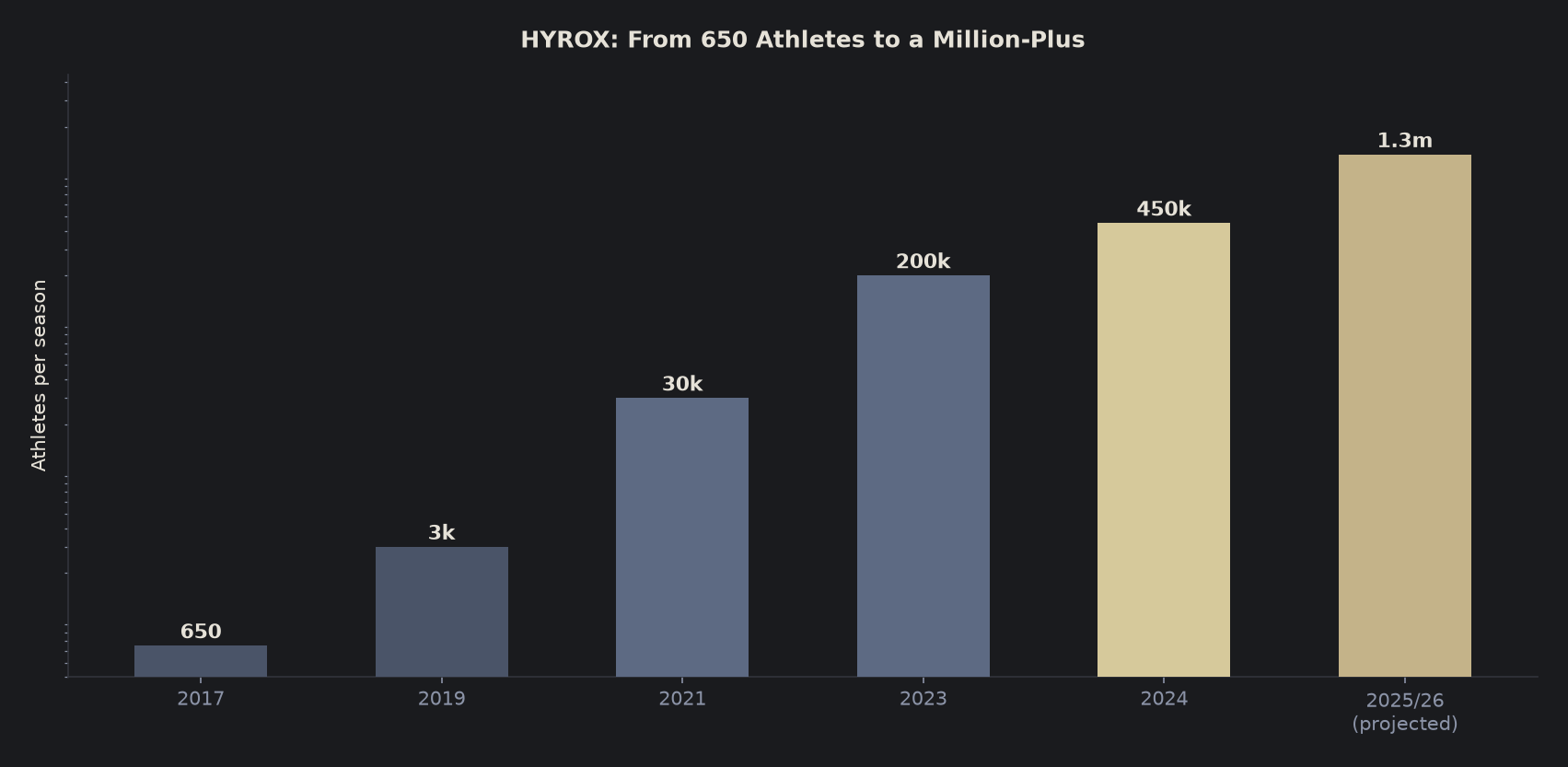
Ten years ago, if you wanted a race to train for, you picked a distance: a 5K, a marathon, a triathlon. Now the fastest-growing fitness events in the world are hybrid races: run, lift, run again, repeat. And the one leading the charge is HYROX.
What HYROX Actually Is
HYROX is beautifully simple. It’s the same race, worldwide: an 8km run, split into eight 1km segments, with a functional workout station between each one. You’ll do a sled push, a sled pull, farmer’s carries, burpees, wall balls, rowing, sandbag lunges and more, always in the same order, always the same weights.
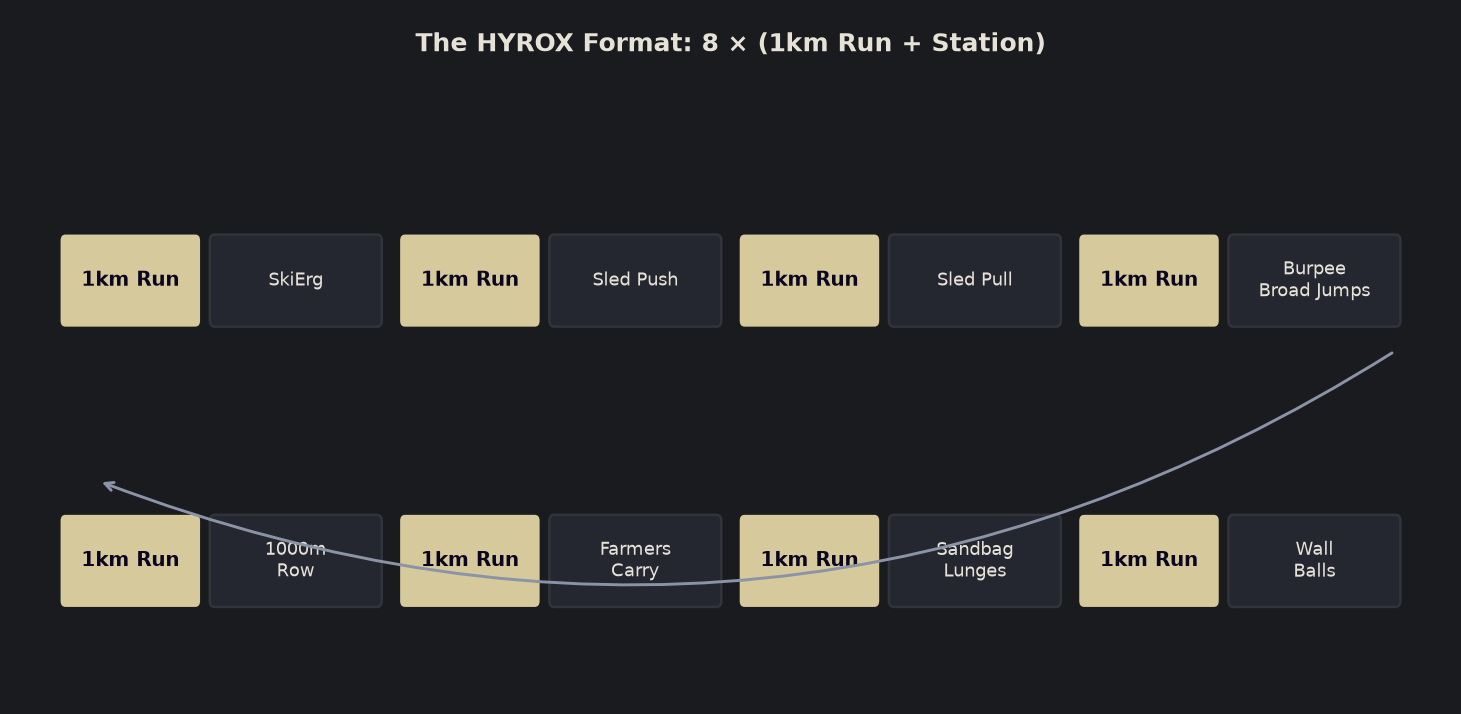

Because it’s standardised, everyone’s time is comparable. Your result puts you in a global ranking against your age group, and the top athletes from each event qualify for World Championships. That standardisation is the genius bit: it’s a genuine sport with a leaderboard, not just an event you survive.
Why It’s Booming
- It’s for everyone. Elite athletes race it, but so do first-timers, teams of two splitting the work, and walkers. Average participants take 90 minutes to nearly 2 hours. There’s no cut-off time.
- It rewards balance. Pure runners get exposed on the strength stations; pure gym-goers get exposed on the run. You can’t fake it, which is exactly the appeal.
- Community. The events feel like a festival crossed with a group class: everyone running the same stations, everyone cheering the last finishers as hard as the first.
- It’s measurable. “Get fitter” is vague. “Beat my London time in Manchester” is a mission.
How to Train for Your First One
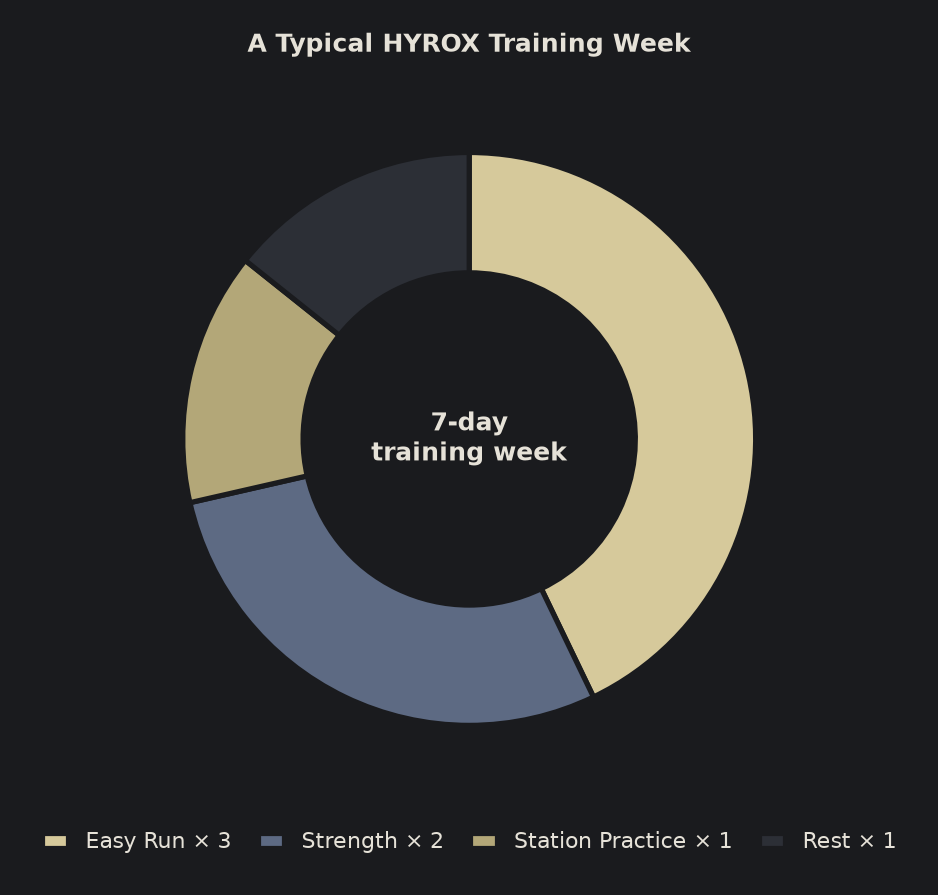
- Run volume first. 8km of running in total is the backbone. If you can comfortably run 5K, you can build to HYROX shape in 12-16 weeks of sensible training.
- Strength with intent. Not bodybuilding: squats, deadlifts, lunges, presses, carries and rows, in the 8-15 rep range, at a pace that keeps moving.
- Practise the stations. Wall balls, rowing intervals and sled work have technique and rhythm. Practising them under mild fatigue is the real training stimulus.
- Pacing wins races. Nearly every first-timer goes out too fast on station one and pays for it by the sled pull. Negative split the run legs and you’ll pass people all day.
- Simulate once or twice. A “half HYROX” in training (4 x 1km with stations) teaches you more than any blog post, including this one.
The Real Reason I Rate It
Hybrid racing has done something wonderful: it’s given ordinary gym-goers a reason to train like athletes. A target, a plan, a race day, a community. That’s the exact recipe that turns “I should exercise more” into “I’m training for something”. And once you have that, consistency takes care of itself.
Thinking about signing up for your first HYROX, or want a training plan built around one? Come talk to me. This is my favourite kind of project.
Want help with your fitness journey?