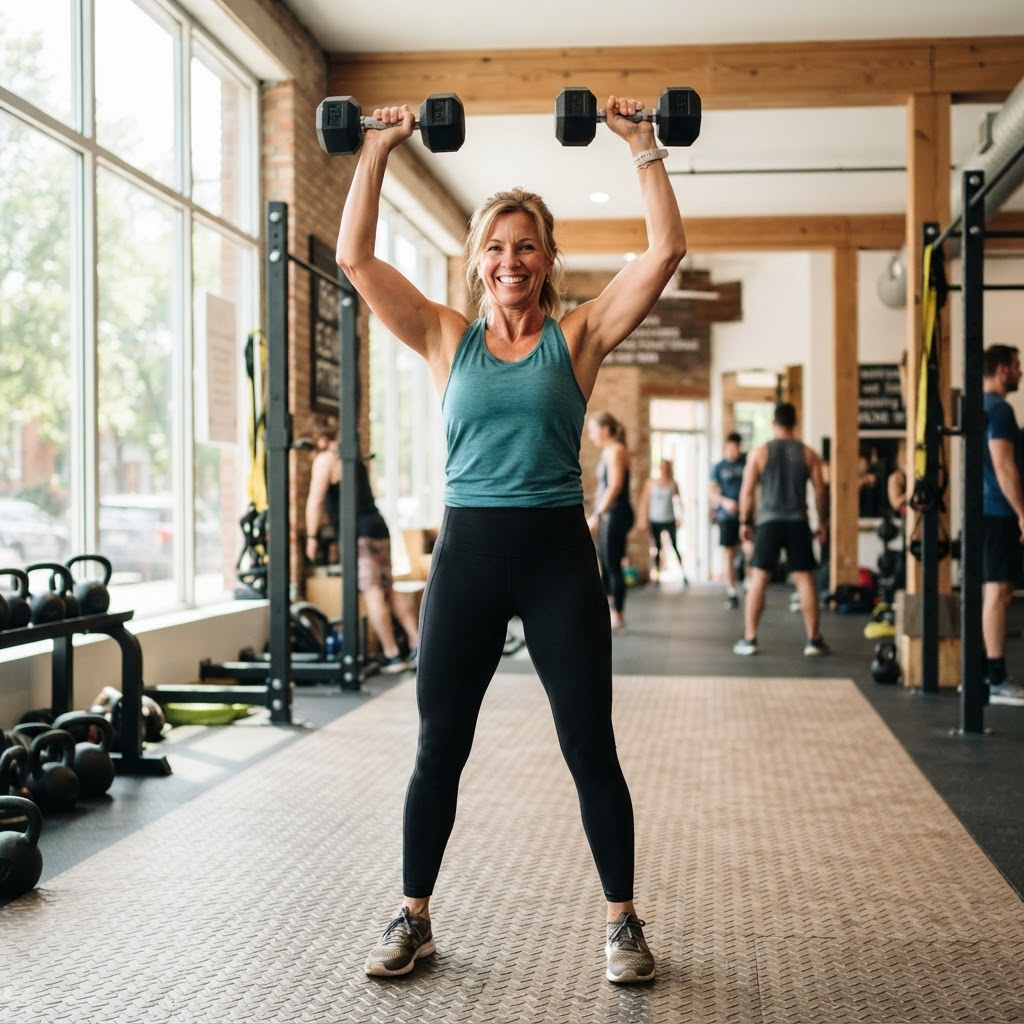
The conversation around menopause has changed enormously in the last few years, and about time too. Women in their 40s, 50s and beyond are no longer being told to quietly take up aqua aerobics and get on with it. They’re lifting weights, getting strong, and demanding training that reflects what their bodies actually need. Here’s why that’s exactly right.
What’s Actually Happening
Through perimenopause and menopause, oestrogen levels decline, and oestrogen isn’t just a reproductive hormone. It helps protect your muscle mass, bone density, and cardiovascular system. As it falls, women lose muscle and bone faster than at any earlier stage of life. That shows up as creeping weight gain around the middle, reduced strength, aching joints, disrupted sleep and mood changes.
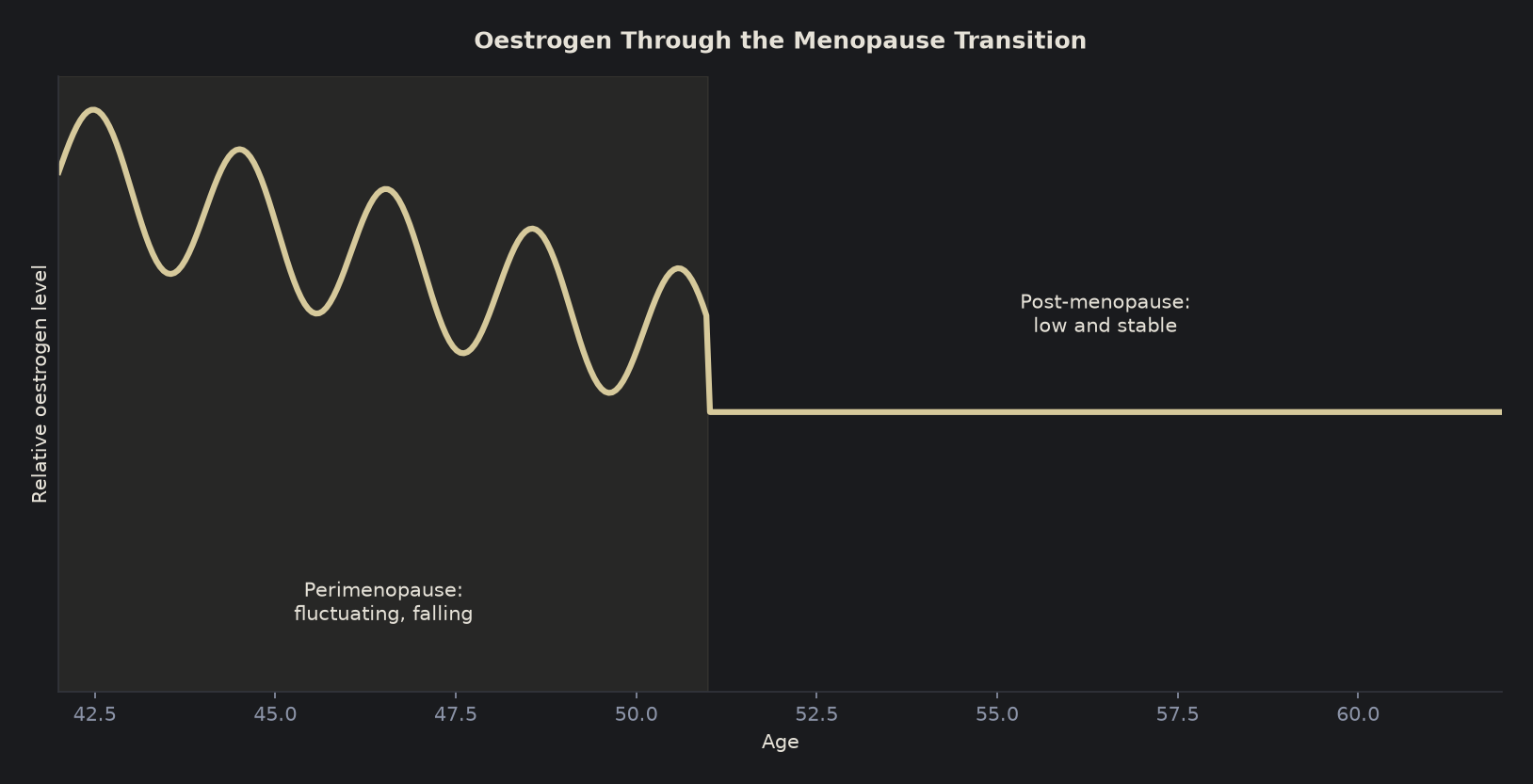
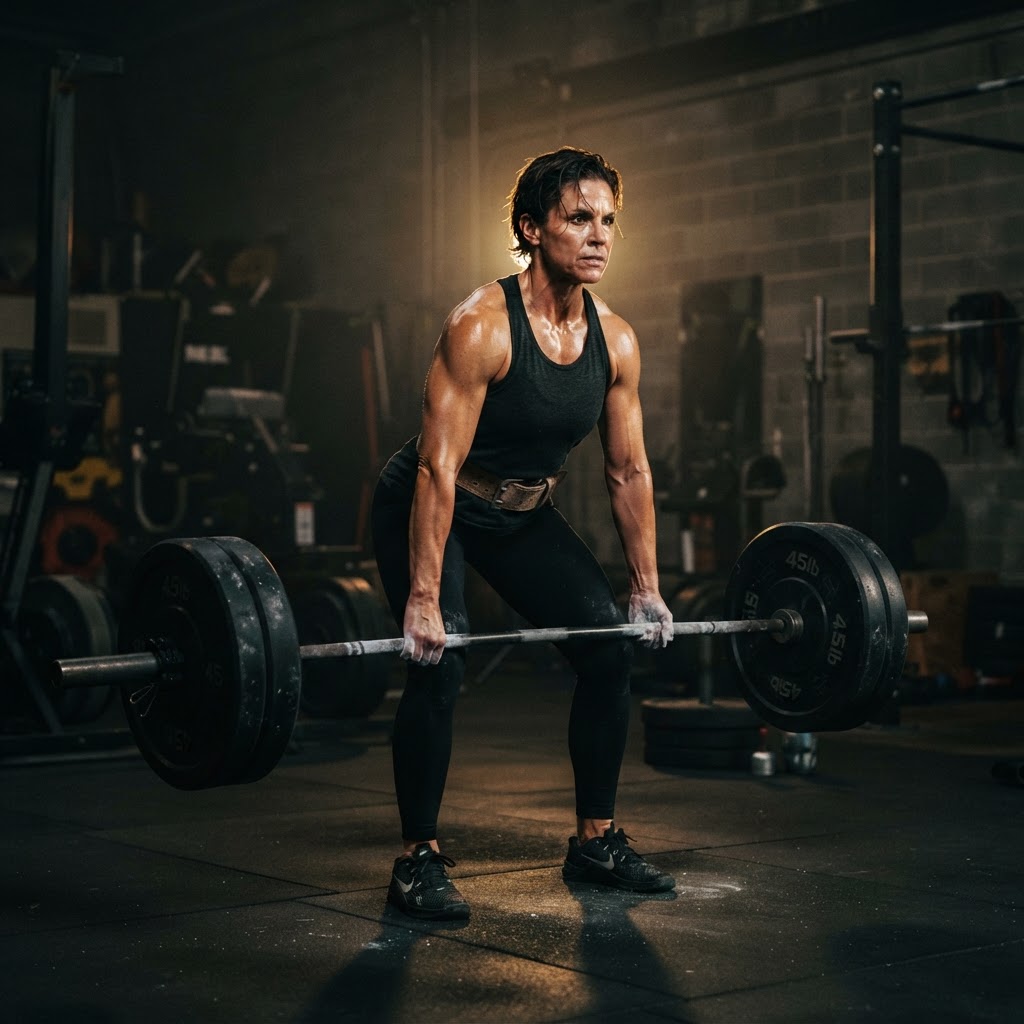
That sounds grim, but there’s a flipside: muscle and bone are still remarkably responsive to strength training in this stage of life. The stimulus just has to be strong enough. Light dumbbells and high reps alone won’t cut it.
Why Heavy Lifting Is the Menopause Superpower
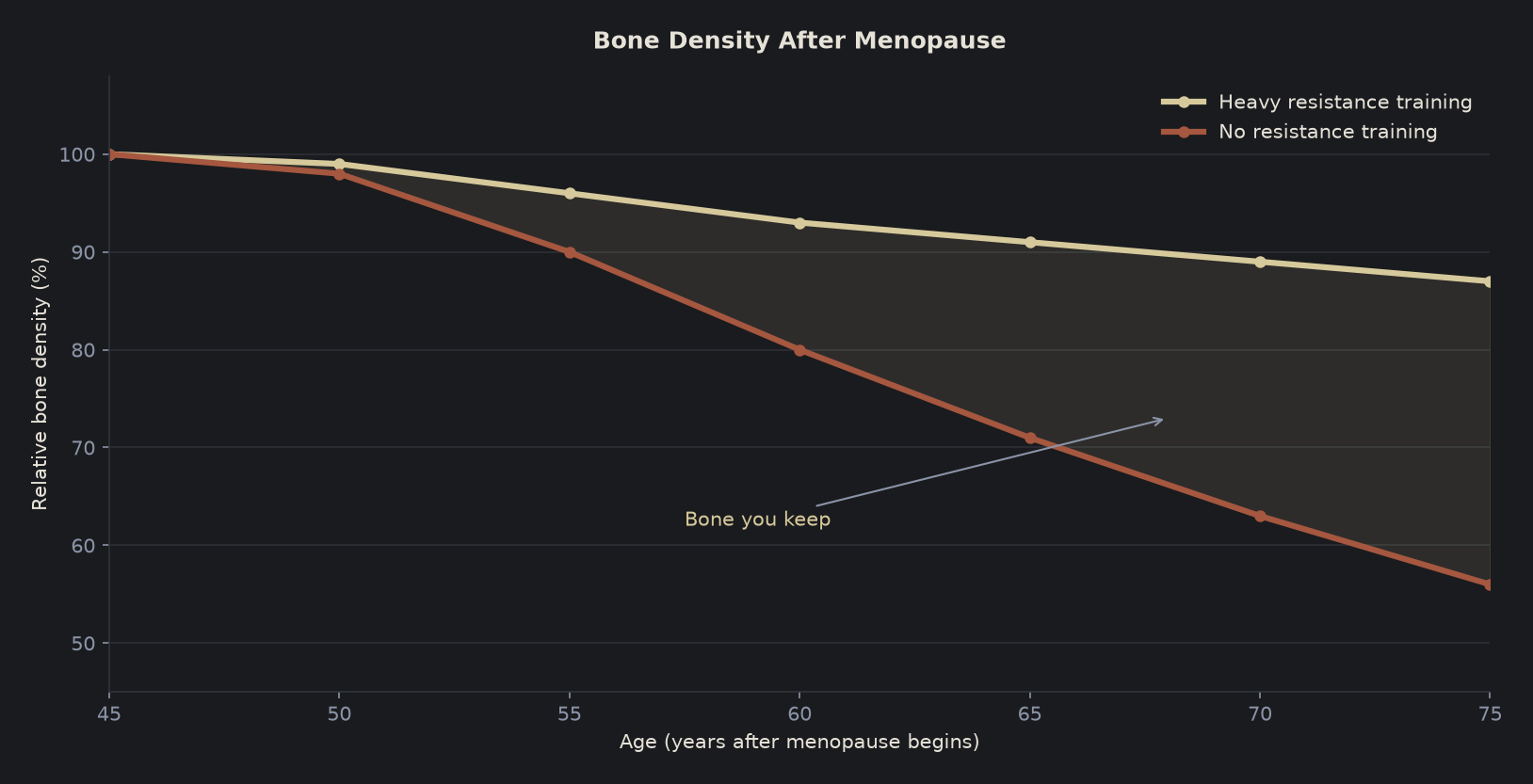
- Bones. Progressive resistance training is one of the best-evidenced ways to slow bone density loss, precisely because muscle pulling on bone signals your body to keep it.
- Muscle. Every kilo of muscle you keep protects your metabolism, your joints and your independence later in life.
- Body composition. Weight changes at midlife are normal, but strength training shifts the ratio of muscle to fat in your favour far better than endless cardio and crash diets.
- Mood and sleep. Lifting has a genuine, well-documented effect on mood, stress and sleep quality, and better sleep makes everything else easier.
- Hot flushes and joint comfort. Many women report better symptom management with consistent exercise, alongside whatever they and their GP decide about HRT.
What Good Training Looks Like Now
- Lift heavy enough. Working at a challenging weight for 6-12 reps, two or three times a week, is the sweet spot. The last couple of reps should feel like work.
- Recover harder. Recovery capacity changes with hormones and sleep. Two or three quality sessions beat five mediocre ones.
- Keep some low-intensity cardio. Walking (hello, Cornwall coast path), cycling and swimming support your heart and help manage stress.
- Protein up. Midlife bodies need more protein than you think to hold and build muscle: roughly 1-1.2g per kilo of body weight a day, spread across meals.
- Work with your GP on the rest. Exercise is powerful medicine, and it works well alongside, not instead of, whatever medical support you and your doctor choose.
You’re Not Too Late, and You’re Not Too Old
Some of my favourite clients started strength training in their 50s and 60s, from a standing start, and have transformed what their bodies can do. The first session is always the hardest one to book.
If perimenopause or menopause has you feeling like your body changed without your permission, come and have a chat. 1-to-1 coaching or our community classes, either way you’ll be welcomed, and you’ll be stronger before you know it.
Want help with your fitness journey?