

If you’ve spent any time around fitness social media this year, you’ll have heard someone going on about Zone 2. It’s become the buzziest phrase in endurance training, but strip away the hype and it’s one of the most genuinely useful training ideas to go mainstream in years. So what is it, and should you bother?
What Zone 2 Actually Is
Zone 2 is the lowest “working” intensity in most five-zone heart rate models. In plain English: it’s the pace you can hold all day. You’re breathing a little deeper than resting, but you could still hold a full conversation, recite a phone number, or sing the odd line of a song (badly, if you’re anything like me).
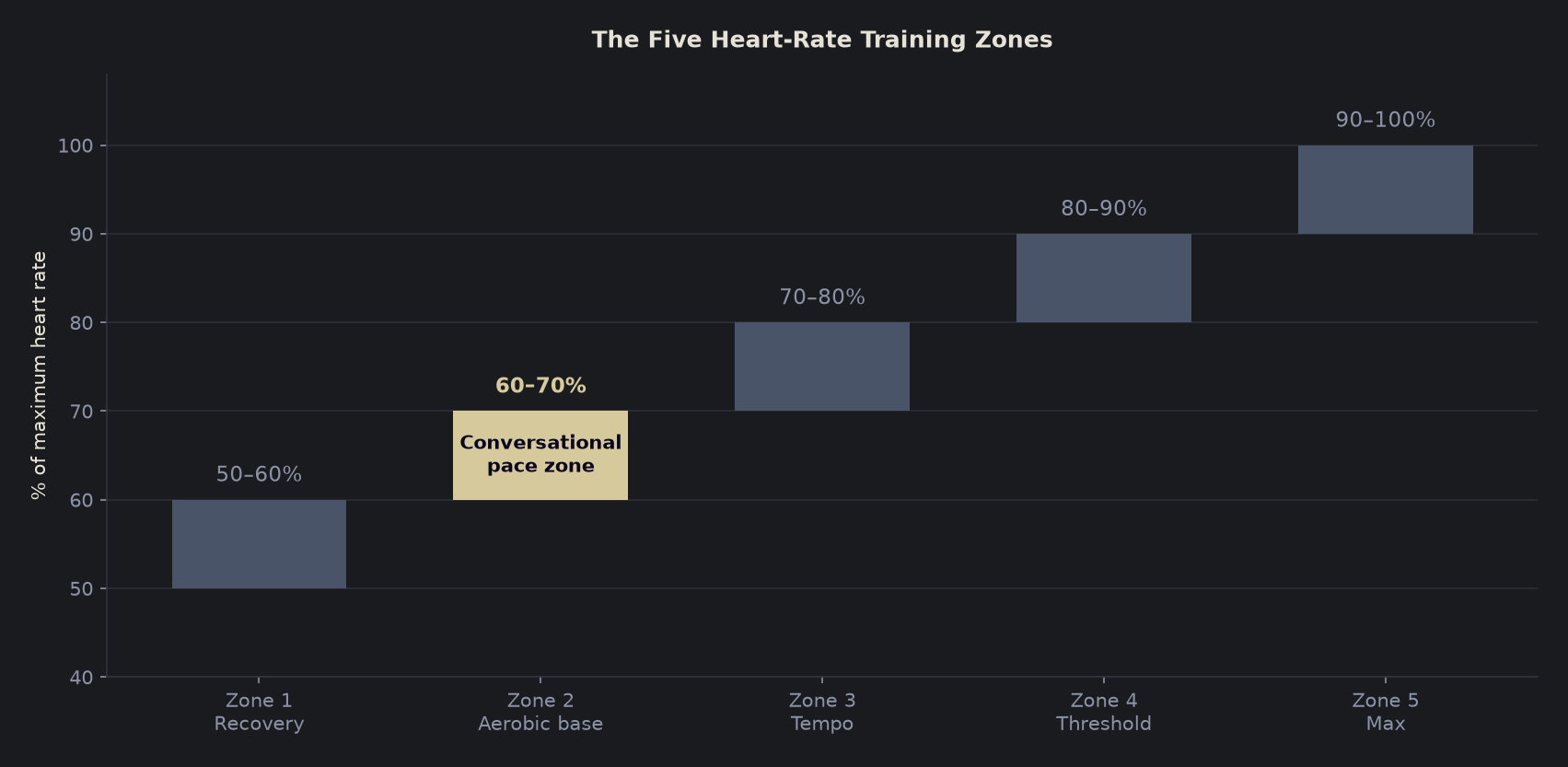
For most people that lands somewhere around 60-75% of your maximum heart rate. But you don’t need a lab test or an expensive chest strap to find it. The talk test is free and remarkably accurate: if you can chat comfortably, you’re in the zone. If you’re gasping between words, you’ve drifted up. Slow down.
Why Everyone’s Talking About It
Zone 2 has been the secret weapon of professional cyclists, rowers and runners forever. It went mainstream thanks to longevity researchers and coaches explaining a simple truth: your aerobic base is built slowly, at low intensity.
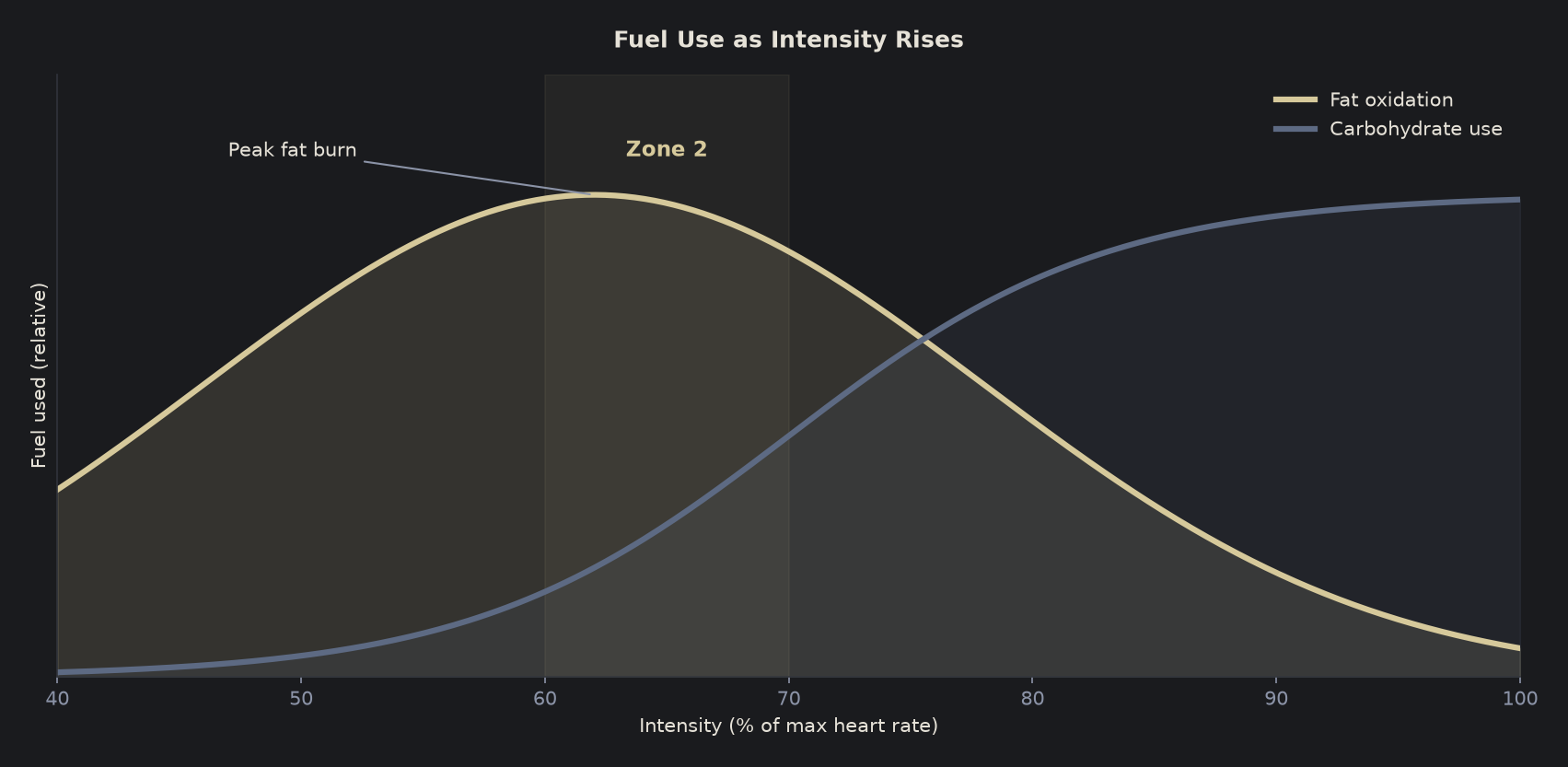
Training in Zone 2 improves the density of mitochondria (your cells’ energy factories), teaches your body to burn fat efficiently, strengthens the heart, and builds the engine that every other kind of training sits on top of. It also barely costs you anything in recovery, which means you can do a lot of it without digging yourself into a hole.
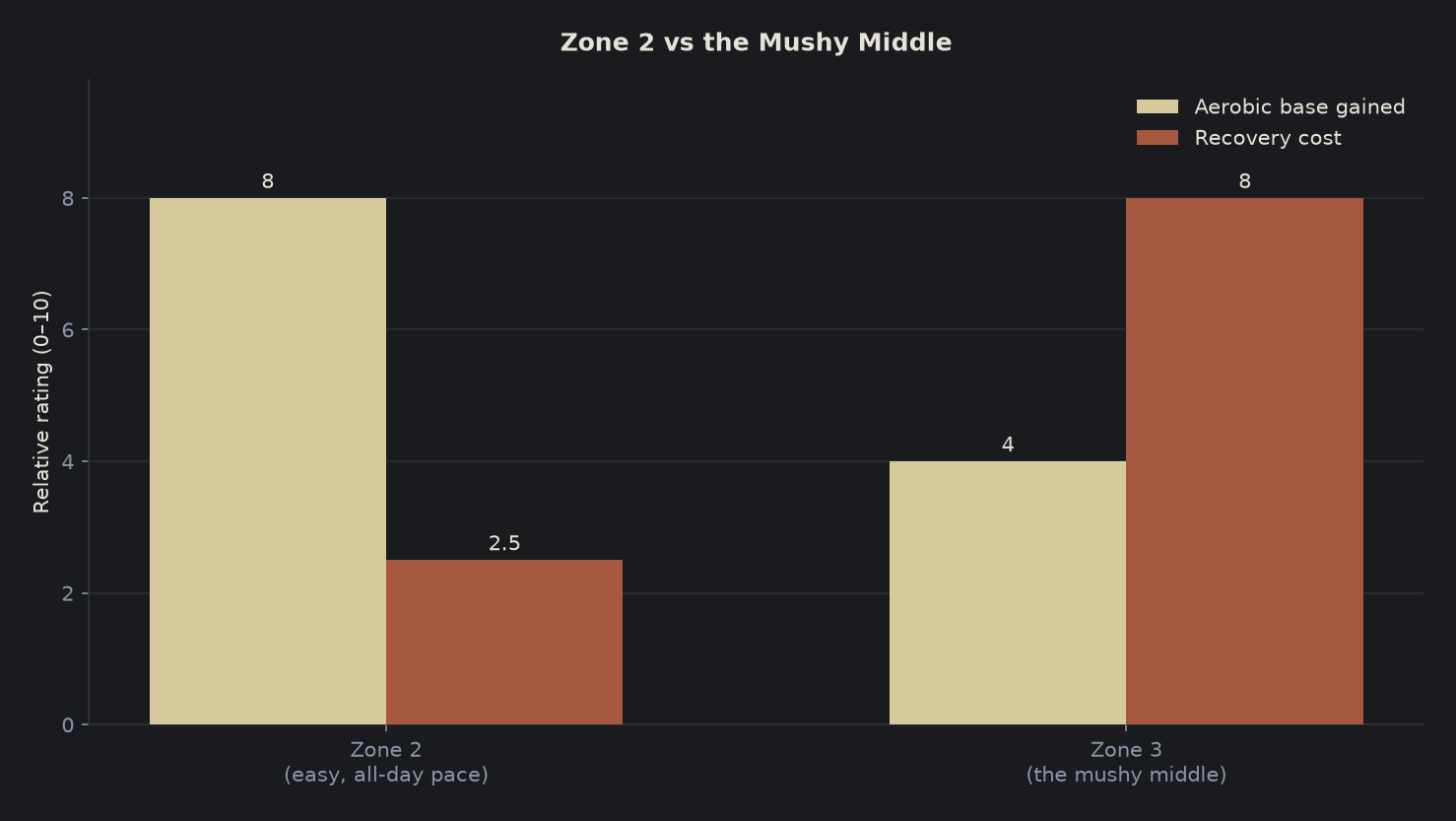
The biggest mistake people make with cardio is living in the “mushy middle”: too hard to build the aerobic base, too easy to drive high-end fitness, and punishingly tiring. Zone 2 training is the antidote.
How to Actually Do It
- Pick something you enjoy. Brisk walking, jogging, cycling, swimming, the cross trainer, a coastal path hike. Enjoyment is the programme.
- Use the talk test. If you can’t hold a conversation, ease off. Seriously: going slower is the skill.
- Start with 2 sessions a week of 30-40 minutes. Build up towards 45-60 minutes if you have the time.
- Keep 1-2 harder sessions if you like intensity (that’s what group classes are for) and let Zone 2 fill in the rest of the week.
- Watch the terrain. A “gentle jog” up a Cornish hill is not Zone 2. Flat routes, or a treadmill with a small incline, make pacing easier.
The Honest Bit
Zone 2 isn’t a fat-loss miracle and it won’t replace strength training. It’s one pillar of a bigger picture: base cardio, strength work, good food, decent sleep. But as a trend, this is one of the rare ones worth acting on. It’s gentle enough for almost everyone, sustainable by design, and the fitness it builds is the kind you keep.

If you want help finding your Zone 2 pace, building a week around it, or you’d just like a walking-and-running plan you can actually stick to, that’s exactly the kind of thing we build together at nASH Fitness.
Want help with your fitness journey?